
Stucco Deep Dive: All Your Options, Costs & What to Expect
Last Updated: April 30, 2026
Stucco is one of those things most homeowners don’t think about… until they have to.
From the street, it can look clean, durable, and pretty low-maintenance. And for the most part, it is. But once something starts to look off, the next step isn’t always obvious. So if you’re trying to figure out what to do with your stucco—repair it, refresh it, repaint it, or completely redo it—this is your guide to what actually matters.
Let’s break it down.
First: What Kind of Stucco Are You Dealing With?
Not all stucco is created equal. Most homes will fall into one of two categories:
Traditional (Hard Coat) Stucco
This is the classic system—cement-based, layered, and built to last. It’s durable but it can also develop cracks over time as your home naturally shifts.
Synthetic Stucco (EIFS)
This is a newer system with a foam base and a flexible finish. It’s more energy-efficient and less prone to cracking, but it can be more sensitive to issues if not installed correctly.
If you’re not sure which one you have, you’re not alone. Most homeowners don’t. But it does matter, because repairs and coatings can vary depending on the system, so you will want to find out. While there are a few ways you can tell, the simplest is just to give it a good knock. Is it solid like concrete? That classic stucco. Is it more hollow sounding? Probably EIFS.
What Are Your Options?
Here’s where things start to branch out a bit.
1. Minor Repairs (The “Let’s Not Overreact” Option)
If you’re dealing with small cracks or isolated damage, targeted repairs might be all you need. This usually means filling cracks, patching small areas, and blending the texture so everything looks consistent again. When done properly, this is the most cost-effective route and can extend the life of your stucco without turning it into a full-scale project.
2. Repainting (The “It Still Works, Just Looks Tired” Option)
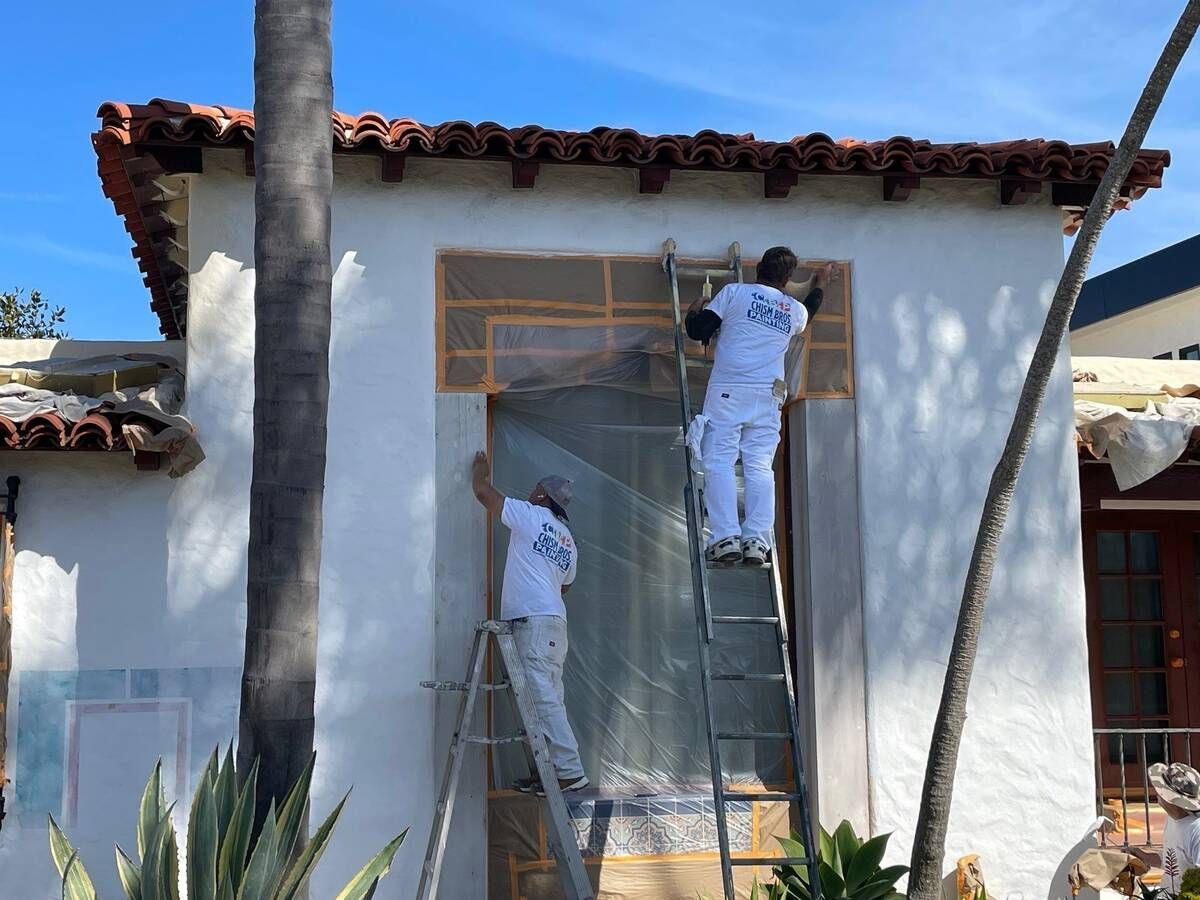
Stucco can absolutely be painted—and in many cases, it should be. Over time, sun exposure and weather start to break down the existing coating. Even if everything underneath is still solid, the finish can fade, chalk, or lose its uniform look. A quality repaint brings the color back, adds a fresh layer of protection, and helps seal minor surface imperfections. Think of it as a reset for your home, without changing the system itself.
3. Elastomeric Coatings (The “Extra Protection” Option)
This is where things get a little more specialized. Elastomeric coatings are thicker and more flexible than standard paint, which allows them to bridge small cracks, improve waterproofing, and add durability to aging stucco. They’re a great option when your stucco is starting to show wear but isn’t at the point of needing a full replacement. That said, they’re not a magic fix. If there are underlying issues—especially moisture-related—they need to be addressed first.
4. Full Re-Stucco (The “Let’s Start Fresh” Option)
If your stucco has more significant issues like larger cracks, widespread failure, or signs of moisture damage, you may be looking at a full redo. This process involves removing compromised material, repairing what’s underneath, and applying a new stucco system. It’s the most involved and most expensive option, but in some cases, it’s the right long-term move to protect your home and avoid ongoing repairs.
What Does Stucco Work Actually Cost?
Let’s talk numbers, because that’s usually the next question. While every project is different, here are some general ranges:
- Minor repairs: A few hundred to a couple thousand dollars
- Repainting: Typically $4–$8 per square foot
- Elastomeric coatings: Slightly higher than standard paint due to material and labor
- Full re-stucco: $15–$30+ per square foot depending on scope
Yes, that’s a wide range. And yes, your specific home will land somewhere in the middle. The biggest factors?
- Condition of existing stucco
- Size and accessibility of the home
- Level of prep required (this is a big one)
How Do You Know Which Option Is Right?
The short answer? It depends on what you’re actually seeing—just like with paint.
- Small cracks and isolated issues → repairs
- Fading, chalking, or worn finish → repainting
- Widespread hairline cracking → elastomeric coating
- Structural issues or moisture concerns → deeper repairs or replacement
The key is not jumping to the biggest solution right away, but also not ignoring early signs until they become bigger problems.
The Bottom Line
Stucco is durable, but it’s not maintenance-free.
The good news is, most issues don’t require a full reset. In many cases, a well-timed repair or repaint can keep your home protected and looking sharp for years. The trick is knowing what you’re looking at—and choosing the option that fits both the condition of your home and your long-term goals.
Chism Brothers Painting
Chism Brothers Painting has been working on homes throughout San Diego for generations, which means we’ve seen just about every version of stucco you can imagine. From minor repairs to full restorations, a big part of the process is simply helping homeowners understand what they’re looking at and what actually makes sense for their home.
Sometimes that means moving forward with a project. Other times, it means you’ve got more time than you think.
Either way, the goal is the same: give you a clear, honest answer so you can make the right decision without feeling rushed into it.






Tell us about your project
Tell Us About Your Project


Contact us today to schedule a visit from one of our estimators! We’ll come to your home and provide a detailed estimate.
(858) 454-3850