How Much Does It Cost to Paint a House Interior in San Diego? (2026 Pricing Guide)
Last Updated: July 1, 2026
You called three painters about painting the inside of your home and got three numbers that don't match. The reason is usually simpler than it looks: each painter was counting a different job.
Are we painting just the walls? Walls and ceilings? The trim, the baseboards, the crown molding? The doors and windows? The closets?
Two honest painters can quote the same house very differently because one priced walls-only and the other priced everything down to the inside of the closets.
After painting San Diego homes since 1982, here's what we've learned about what interior work actually costs, what drives the number up or down, and how to save real money without cutting the corners that matter.
Can You Get an Accurate Interior Quote Online?
Closer than you might think. Interiors actually estimate pretty well online, as long as you give enough detail.
Unlike exteriors, where hidden condition and access create a lot of unknowns, the inside of a home mostly comes down to things you can count and describe: the square footage or room dimensions, the number of doors and windows, whether the home is empty or furnished, and which surfaces you want painted.
That might mean walls only, or walls plus ceilings, trim, and doors. Go room by room and answer enough of those questions, and a good online tool can give you a realistic, good-faith range to plan around before anyone sets foot in your home.
That's exactly why we built our free online estimate tool. It walks you through the right questions and gives you a solid starting range:
https://www.chismbrothers.com/online-estimate-tool
Here's the honest part, though: even a good online estimate is a starting point, not the final word.
It's always smart to have someone come out and finalize it, even when your online number was already close. The in-person visit is where we measure, take photos, check the real condition of the walls, see whether what's on them is oil- or water-based, and confirm what covers in one coat versus two.
The online tool gets you close. The visit makes it exact.
Interior Painting Across San Diego Homes
San Diego has more variety inside its homes than most people realize, and the inside of the house tells you a lot about the work.
Over the years we've painted interiors throughout the county, including La Jolla, Del Mar, Carmel Valley, Rancho Peñasquitos, Mission Hills, Point Loma, Poway, Rancho Santa Fe, and many others.
Older, historic homes in areas like Mission Hills and Old Town often have plaster walls and more detailed trim and craftsmanship that take more time and a careful hand.
Newer tract homes in Carmel Valley or Rancho Peñasquitos tend to be more standardized, which can make them more predictable to price. And then there's La Jolla, where you'll find everything from small cottages to large custom homes, sometimes on the same street.
California interiors also tend to have textured walls, including knockdown, orange peel, and skip-trowel “Spanish” textures, rather than the smooth walls common back east. That texture actually helps. It hides minor imperfections and can make a finish look better. It also changes how paint goes on and how much it takes.
The point is that the age, style, and condition of a home matter more inside than the neighborhood on the mailbox. That's why the most accurate price comes from someone seeing your specific home.
The Difference Between a Real Estimate and a Guess
A good interior estimate is mostly about getting the scope crystal clear, in writing, before anyone opens a can of paint.
When a painter walks through and actually measures, counts, and takes pictures, you end up with a proposal that spells out exactly what's being painted and what isn't. That includes which rooms are included, whether ceilings are included, what's getting one coat versus two, and what gets primed.
When a painter just walks through quickly, eyeballs it, and gives you a rough idea without writing much down, that's where the communication problems start.
Halfway through the job you discover the closets weren't included, or the ceilings were “extra,” or the trim was never in the number.
So when you compare interior quotes, don't just compare the totals. Compare what each one actually says it's painting. A clear proposal is doing you a favor because it's showing its work.
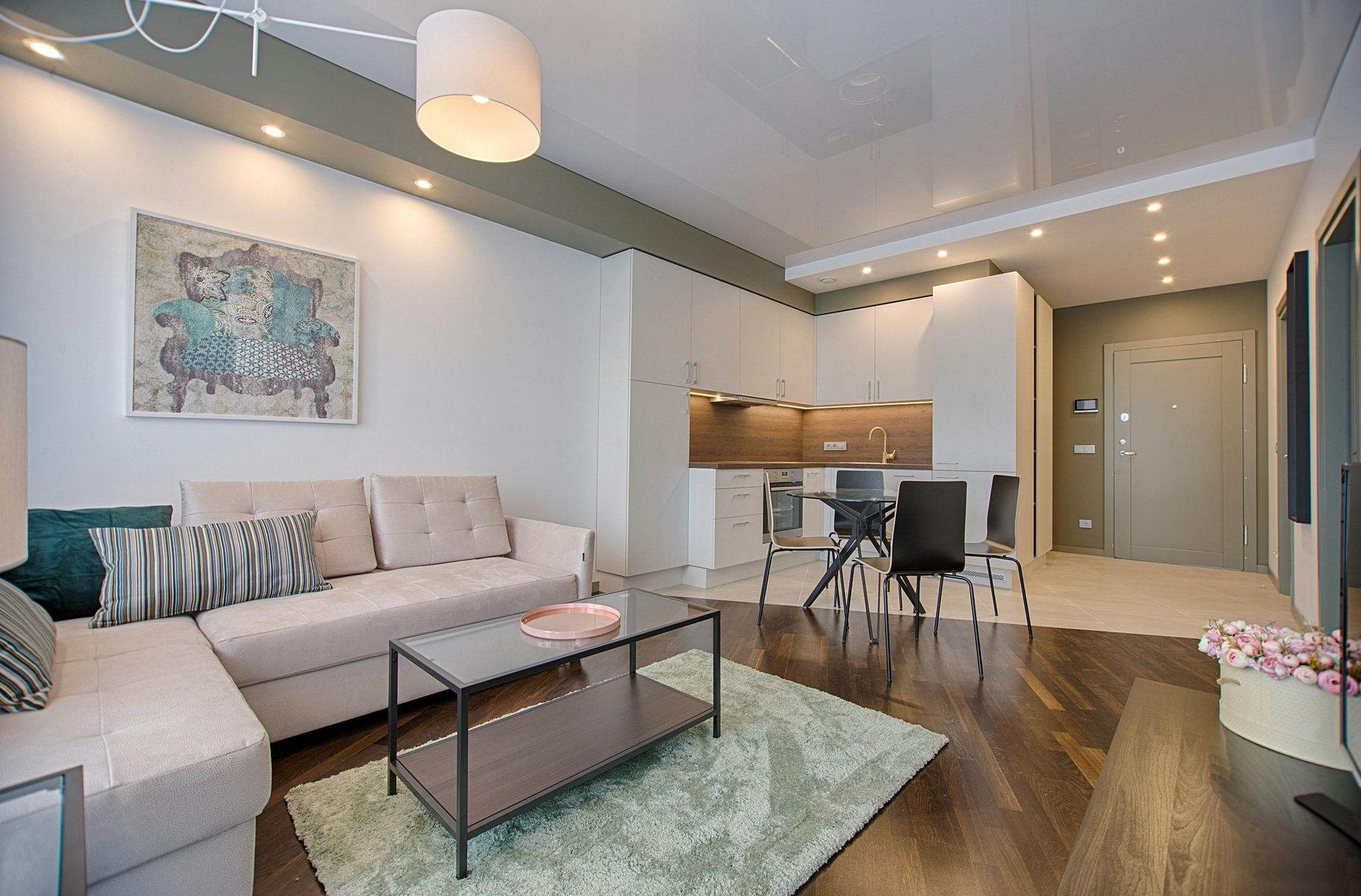
What Actually Drives the Cost of Interior Painting
When we walk a home, here's what's quietly moving the price up or down.
How Much You're Painting
Walls only is the most cost-effective interior job there is. Add ceilings, and it grows. Add trim, baseboards, doors, and windows, and it grows again.
Each surface is more labor, more cutting-in, and more time.
The Trim Itself
The size and amount of baseboard, casing, and crown molding all matter. Tall, detailed trim takes longer to do right than a simple modern baseboard.
Ceilings
Ceilings are one of the spots where you might not need to spend at all. We'll come back to that below.
Closets
Most people skip the insides of closets unless they're willing to empty them out. Painting closets means clearing everything first, which is more work and more cost.
Colors and Color Changes
One color throughout is faster than several. Going from a dark wall to a light one, or the reverse, can mean an extra coat and more material.
Wall Condition
Patching, repairs, and the priming that goes with them are real labor. A wall in good shape paints fast. A wall full of holes, cracks, or old repairs does not.
Ceiling Height
Tall ceilings and stairwells mean more setup, more ladder work, and more time per room.
The Biggest Way to Save Money: Paint an Empty House
Here's the honest truth about saving money on an interior: the more physical labor the painter has to do that isn't painting, the more you pay.
Moving furniture, taking pictures off walls, covering and protecting everything, that's all time. And time is the job.
So the single best time to paint an interior is when the house is empty. We know that's hard to coordinate when you're buying a home and trying to line up painters in the middle of a move, but if you can paint before the furniture comes in, you'll save real money and get a cleaner result.
If you're staying in the home, you can still cut the cost by doing the light labor yourself. Take the pictures and shelves down, clear the surfaces, and move what you can.
If you'd rather not, here's an option a lot of people don't think of, and it's not as expensive as you'd expect.
Transfer and storage companies will come in and carefully move the big items, including beds, pianos, and heavy furniture, into the center of the rooms or out of the way so the crew can work efficiently. Then they put everything back.
It's an especially smart move if you're already doing other work, like refinishing the floors, and want to coordinate it all at once.
And if you simply want the most cost-effective job possible: walls only, or walls and ceilings, with the room cleared out. That's the leanest version of the work.
Ceilings, Sheens, and Texture
A few interior-specific things are worth understanding before you spend.
Ceilings Don't Always Need Painting
This surprises people. In a tract home or a house in good shape, with no moisture, staining, or cracking, ceilings can go 15 to 20 years and still look fine.
Plenty of homeowners keep them white and flat and simply don't repaint them often.
Flat paint on a ceiling hides the most and shows the fewest imperfections when light rakes across it. If your ceilings are clean and sound, that's money you may not need to spend right now.
Sheen Is a Real Decision
Sheen is not just a finish. Flat looks great on walls and ceilings and covers beautifully, but even the best flat paints are harder to clean.
That's why a lot of homeowners go with a low sheen, such as eggshell or satin, in living spaces, and something with more sheen in bathrooms and other high-moisture or high-touch areas.
In bathrooms especially, a mildew-resistant paint is worth considering.
Texture Changes How a Wall Paints
Most San Diego interiors are textured, and that texture hides minor flaws and helps the finish look uniform.
It also affects how much paint a room takes and how it's best applied.
Cabinets: The One Interior Job You Don't Want Done Cheap
If you're painting kitchen or bathroom cabinets, understand up front that this is its own craft, and it's not cheap to do right.
You do not want someone brushing and rolling your cabinets in place.
Done properly, the doors and drawers come off, the hinges come off, everything gets labeled and numbered, and the surfaces are cleaned, prepped, masked, and sprayed with a finish built for the abuse cabinets take.
There are different products for this, from very durable, sprayable, high-quality acrylics to tougher two-component, or 2K, finishes that last even longer. The right one depends on the cabinets and how hard they're used.
All of that prep, removal, masking, spraying, and careful reassembly is exactly why cabinets cost what they do. It runs in the same hourly range as the rest of the work, but there are simply more hours in doing it right.
When a cabinet quote looks too cheap, it usually means the doors are getting brushed in place, and you'll see it within a year.
The Most Overlooked Cost Factor: Preparation
Most homeowners focus on the paint. Professionals focus on the preparation.
Inside, that means patching holes and cracks, repairing damaged drywall or plaster, caulking, sanding, and priming.
Any patch, any bare drywall, and any repair has to be primed and sealed before it's painted, or it shows through.
There's also a specific trap on certain woods. Pine and a few others can have what's called tannin bleed, where the wood's natural color leaches through the paint. The fix is using the right oil-based primer or sealer up front.
A painter who skips that step leaves you with stains bleeding through a finish that looked fine on day one.
The longevity and look of an interior job come more from the prep than the paint. A premium paint over poor prep rarely performs the way you hoped.
What's Typically Included in an Interior Painting Proposal
Every company structures proposals differently, but a quality interior estimate often includes:
- Surface preparation and protection of floors and furniture
- Patching and minor repairs
- Priming and sealing where needed
- The specific surfaces being painted, such as walls, ceilings, trim, doors, and closets
- Number of coats specified per surface
- Labor and materials
- Cleanup
- Warranty coverage
One reason interior quotes vary so much is that different contractors include different surfaces and different levels of prep. Always compare scope, not just price.
What You're Actually Paying for at the Hourly Rate
In 2026, a professional painting company in San Diego is generally operating somewhere between $75 and $120 an hour, and at the high end maybe $120-plus for specialty work like cabinets.
That same range covers interior and exterior work. It's a wide spread, and it tells you something real.
A well-established, full-service company, one with real overhead, insurance, and a trained crew, generally lands toward the middle of that range, plus materials.
The low end, around $75, is near the floor of what it costs to run a legitimate painting business here. Equipment, vehicles, storage, an office that answers the phone and schedules your estimate, and a crew that's trained and shows up are all overhead.
Done right, overhead is just what professionalism costs.
When a price is rock-bottom, something is usually subsidizing it, and it's frequently the prep, the second coat, or the standing-behind-it.
Two more things are worth a homeowner's attention. Insurance and bonding aren't just paperwork. They're your safety net.
If something gets damaged or someone gets hurt inside your home, a properly licensed, insured, and bonded company means you're protected instead of being the one left holding the bill.
The same goes for how a crew is hired and paid. Some painters lean heavily on subcontractors or work around the labor rules to keep their number low. We follow California law and stay close to what we're set up and licensed to do.
Part of that is doing right by our people, but it protects you too. When a worker in your home isn't properly covered, that risk can find its way back to the homeowner.
A Word About Warranties
You'll see some painting companies advertise nine-year or even lifetime warranties. We've historically offered three- and five-year warranties, but that doesn't mean we expect your paint job to only last three or five years. We've seen homes we've painted look great well beyond ten years.
Think of it like a new car. A good warranty gives you peace of mind, but you still change the oil, maintain the brakes, and replace the tires. Your home is similar. Stucco can last a long time, while wood, thresholds, and areas exposed to heavy sun, moisture, sprinklers, or salt air may need some attention along the way. A fresh coat of paint on certain surfaces every few years will keep your home looking great for many years!
The goal is to maintain those vulnerable areas before they fail. A little maintenance every few years can help the entire paint job last longer and save you from paying for extensive prep and a major repaint every decade.
We stand behind our workmanship and, beyond California's required one-year contractor warranty, we're happy to discuss a longer written warranty for additional peace of mind. What's appropriate depends on your home, what we're painting, and its existing condition—a 100-year-old historic home is different from newer stucco construction. Talk with your estimator and we'll recommend something that makes sense.
At the end of the day,
we want the same thing you do: keep your home looking great and avoid unnecessary, costly repairs and repainting.
Product Matters More Than People Think
The major suppliers here, including Sherwin-Williams, Dunn-Edwards, Vista Paint, and PPG, formerly Pittsburgh Paints, make products formulated for our homes.
There are also premium options we can bring in from the likes of Benjamin Moore when a job calls for it.
The skill is matching the product to the room: a washable, more durable finish for kitchens and high-traffic hallways, a mildew-resistant paint for bathrooms, the right cabinet finish for cabinets, and knowing when to spray, brush, or roll.
That product knowledge is part of what you're paying a professional for, and it's a big part of why two jobs with the same square footage don't cost the same.
How We Actually Come Up With an Interior Price
We don't pull interior numbers out of the air, and we don't price by the square foot.
We use a production-rate system, which is just a structured way of estimating how many hours the work will actually take, because the hours are the price.
When we walk a room, we measure it. Say it's 12 by 12. We note the ceiling height because tall ceilings mean ladders and more time.
Then we count what's actually getting painted and how each surface has to be handled: walls, ceiling, trim, baseboards, crown, doors, and windows.
Doors are a good example of the detail involved. A door that's brushed and rolled takes different time than one that's sprayed, and we look at how the existing surfaces were done.
We check whether a color will cover in one coat or needs two, and whether what's on the surface now is oil-based or water-based, because that changes the right approach.
Even windows have nuance. Sometimes the glass and sash are fine and only the frames need paint, which keeps the cost down.
All of that adds up to an estimated number of hours. It's why two rooms the same size can cost very different amounts, and why a real walk-through beats a five-minute guess every time.
So What Does It Actually Cost? Real Examples
The honest way to think about an interior is by the room and by scope, because what you choose to paint changes everything.
Take a standard 12-by-12 bedroom with 8-foot ceilings, empty, walls only, two coats.
One painter can usually come in, paint it, and be out in a day, and that lands under $1,000, materials included. That's your baseline.
From there it climbs with scope.
Add the ceiling, the trim, the doors, the windows, the crown, and the closet, and bring in furniture that has to be moved and set back, and that same bedroom can take a painter two days, sometimes three.
The room didn't change. The amount of work did.
So instead of one whole-house number, think in scope:
- Walls only, cleared room: the leanest, most cost-effective work there is.
- Walls and ceilings: a step up, still efficient.
- The full room: walls, ceilings, trim, doors, windows, and closets. This is the most complete and the most labor.
The rest of the house scales the same way, room by room, plus whatever prep the walls actually need.
As rough 2026 planning ranges to set expectations, not quotes:
- A single bedroom, walls only, cleared: typically under $1,000
- A single room done fully with ceilings, trim, doors, closets, and some furniture handling: roughly $1,500 to $2,800
- A whole-home interior, walls and ceilings in decent condition: often around $10,000 to $15,000 for a mid-size home
- A full interior including all trim, doors, and detailed work: $15,000 and up, depending on size and condition
Pricing is always higher when you add more woodwork, cabinets, moving, masking, and covering.
This is where it gets tricky to give a simple number based only on the type of home. We've painted very custom homes that can run over $50,000 to $100,000.
These are planning numbers, not quotes. The only accurate price comes from walking the home. Figures are current as of 2026.
Working Backward From Your Budget
Here's something a lot of homeowners don't realize they can do: tell your estimator what you have to spend.
If you say, “We've got X for this project,” a good estimator can help you make the most of it instead of just handing you a number and walking away.
We can look at how the budget is best spent across the home, which rooms and surfaces matter most, and how to phase the rest over time.
We can also steer the details to fit how you actually live:
- How much traffic a space gets, and whether it needs a tougher, more washable finish
- Whether you've got little kids with their hands on the walls
- The right product for each room and the way it's used
- How often you're actually in a given room
- Color choices, so the result looks great and holds up
That kind of conversation turns an estimate into a plan. Most good painters would rather work with you to fit a real budget than miss the chance to help at all.
Will You Actually Save Money Buying Your Own Paint?
A lot of homeowners assume they'll save by buying the paint themselves, or by doing the job to skip the labor. It's worth understanding how the math really works.
Established painting companies buy a lot of material and hold long-standing accounts, which earns them discounts a homeowner simply can't get, often somewhere between 25 and 50 percent off, depending on the company's history and standing with the supplier.
So the same paint that costs you full retail costs a professional far less.
Between that discount, the tools and equipment a quality job requires, and the hours of your own time, plus the risk of a finish that doesn't hold up, the DIY savings tend to be a lot smaller than people expect once everything's added up.
Not Sure About a Painter You've Never Used? Start Small.
Here's honest advice we've given homeowners for years: if you're unsure about a contractor, hire them for one small thing first.
A single guest bedroom. A bathroom. One accent wall. A small repair and repaint.
A day or two of work, not a lot of money, and you get to watch how they communicate, how organized they are, how clean they work, whether they show up on time, and whether they deliver what they promised before you ever hand them the whole house.
It also forces a good question up front: does this company actually do a lot of what you need?
Some painters specialize. Cabinets and entry doors are perfect examples. We refinish a lot of both, and they take real expertise, so I wouldn't send just anyone on our own crew to do them.
A good company usually has the right specialist for the job. The point is to make sure the work you're hiring for is something they genuinely do well, not something they'll figure out in your living room.
For what it's worth, Chism Brothers does the full range: interiors, exteriors, and cabinets. But whoever you hire, match the painter's real expertise to the work in front of you.
Character and Craftsmanship Since 1982
Painting projects involve people, materials, and thousands of individual details. While no company is perfect, our commitment has always been simple: do the right thing.
That philosophy has guided Chism Brothers Painting since 1982, and it still guides how we serve homeowners today.
We believe quality preparation, honest communication, and standing behind our work matter more than being the cheapest bid on the table.
Whether you live in La Jolla, Del Mar, Point Loma, Mission Hills, Rancho Peñasquitos, Carmel Valley, Poway, Rancho Santa Fe, or anywhere else in San Diego County, the same principle applies: a quality interior paint job starts with a clear scope, honest prep, and choosing the right product for the way you actually live in your home.
If you're comparing interior painting estimates and want one more opinion based on actually walking your home, room by room, in writing, call Chism Brothers Painting at 858-454-3850.
Want a realistic range first? Our free online estimate tool is a good place to start:
https://www.chismbrothers.com/online-estimate-tool
Either way, we'll tell you what we see and put it in writing.
Ask us anything.
Chism Brothers Painting | Character and Craftsmanship Since 1982 | CSLB License #491884 | Serving San Diego County
A Quick Note on Your Rights as a San Diego Homeowner
California requires a written contract for any home improvement work over $500, and as of January 1, 2025, the threshold for needing a licensed contractor rose from $500 to $1,000.
Your down payment is capped by law at 10% of the price or $1,000, whichever is less. So a painter asking for half up front is ignoring a basic protection meant for you.
You can verify any contractor's license yourself in about a minute through the California Contractors State License Board..
Tell us about your project
Tell Us About Your Project
Contact us today to schedule a visit from one of our estimators! We’ll come to your home and provide a detailed estimate.
(858) 454-3850