Stains Below the Roofline? What Rancho Bernardo Homeowners Should Check Before Repainting
Last Updated: October 6, 2026
Before repainting stains below the roofline, Rancho Bernardo homeowners should check whether runoff, gutter issues, failed sealants, damaged fascia, deteriorated eaves, or hidden moisture problems are causing the paint to stain or fail.
Staining under the roofline can look like a simple cosmetic issue, but it often points to something happening above or behind the paint. If water is running where it should not, or if fascia and eaves are deteriorating, repainting alone may only cover the problem temporarily.
Many Rancho Bernardo homes have mature landscaping, patios, rooflines, upper walls, and exterior trim that show age or water patterns over time. Before scheduling exterior painting, it helps to understand whether the stain is surface-level or connected to a condition that needs to be corrected first.
Roofline Stains Are Often a Symptom
Stains near the top of exterior walls should be treated as a clue. They may be caused by dirt runoff, roof drainage, failing gutters, moisture movement, deteriorated wood, cracked sealants, or previous paint failure.
Not every stain means major damage. Some discoloration may simply be surface-level dirt or weathering. But if the same area stains repeatedly, bubbles, peels, or darkens after every repaint, the source should be identified before another coat of paint is applied.
Paint can refresh the surface, but it should not be used to hide an active roofline problem.
Mature Landscaping Can Block Prep and Painting
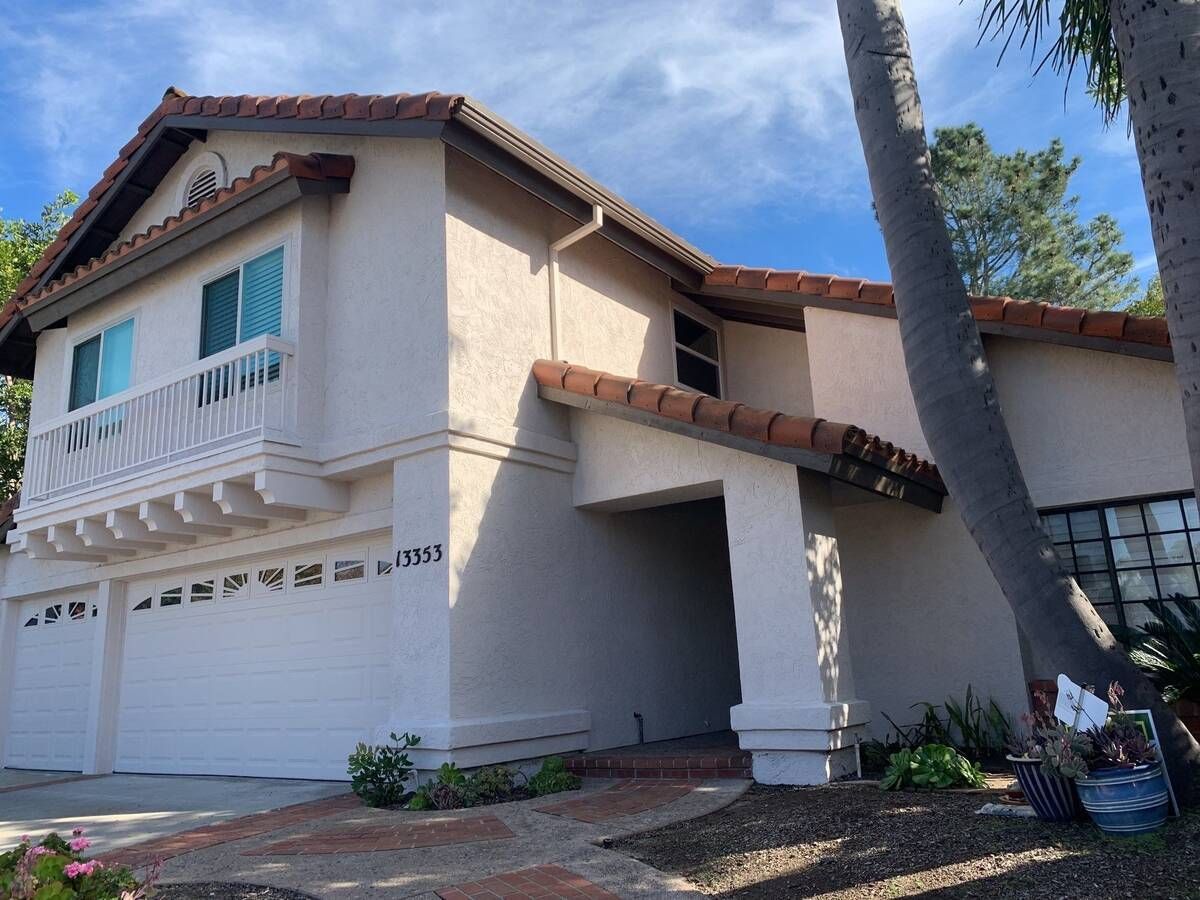
Mature landscaping can make a property feel beautiful, but it can also interfere with exterior painting. Shrubs, trees, vines, hedges, and ornamental plants may block walls, trim, fascia, windows, doors, fences, and lower stucco areas.
Vegetation touching the home can also hide peeling paint, cracked stucco, failed caulk, stains, moisture damage, or pest-related damage. Trimming plants back before painting helps the painter inspect the surface and complete proper prep.
Landscaping does not need to be removed, but it may need to be trimmed, tied back, or protected before work starts. A little preparation can make the painting process smoother and help prevent fresh paint from being damaged by branches or leaves.
Irrigation Can Affect Paint Performance
Irrigation is an important issue for homes near landscaped outdoor areas. Sprinklers, drip lines, overspray, wet soil, and drainage patterns can shorten the life of exterior paint if water repeatedly hits stucco, wood trim, fences, gates, or patio structures.
If sprinklers are hitting the wall every day, repainting alone may not solve staining, bubbling, peeling, or mildew-like growth. If water collects near wood, lower walls, or fence posts, those areas may need repair or moisture correction before paint is applied.
Irrigation should be adjusted before painting so the new finish is not exposed to the same water problem immediately afterward. This is especially important along rear elevations, side yards, and planter areas where water contact may be easy to miss.
Walls and Fences May Need Their Own Inspection
Homes near golf courses and greenbelts often have rear walls, privacy fences, view fencing, gates, retaining walls, or masonry features that shape the overall exterior appearance. These surfaces should be inspected separately from the main house.
Wood fencing, metal gates, stucco walls, masonry, and railings may each need different prep. Some may be paintable, some may need repair, and some may fall under HOA or community rules depending on the property.
Surrounding walls and fences should not automatically be treated the same as the house exterior. If they are part of the visible backyard setting, they should be included in the planning conversation.
Check Whether HOA or Community Rules Apply
Many Rancho Bernardo neighborhoods may have exterior color, fencing, wall, or maintenance guidelines, especially where homes are part of planned communities or shared visual corridors. This does not need to become a complicated HOA discussion, but homeowners should confirm requirements before making visible exterior changes.
Rules may apply to body colors, trim colors, gates, fences, patio covers, view fencing, rear elevations, and surfaces visible from shared outdoor areas. Even repainting the same color may require confirmation in some communities.
Homeowners should confirm approvals before scheduling painting, especially if they are changing colors or painting features near common views.
Outdoor Living Areas Should Be Cleared and Protected
Rear patios, outdoor kitchens, grills, furniture, umbrellas, planters, rugs, lighting, fountains, and decor can affect the painting setup. These items may need to be moved, covered, or protected before washing, sanding, masking, and painting.
Outdoor living areas near golf courses or greenbelts are often highly used, so homeowners should plan for temporary disruption. If patio covers, pergolas, railings, exterior doors, or gates are also being painted, they should be included in the scope from the beginning.
Preparing the space helps the painting crew work efficiently and protect finished surfaces. It also reduces the chance that outdoor furniture, decor, or landscape features will get in the way during prep.
Wind, Dust, and Outdoor Exposure Can Affect Prep
Open rear areas can expose the home to more wind, dust, pollen, leaves, and debris. These conditions can affect washing, drying, masking, and paint application.
Painters may need to plan around weather, clean surfaces thoroughly, protect nearby areas, and avoid painting when outdoor conditions are not suitable. A surface that looks ready from a distance may still need extra cleaning if it faces an open, dusty, or landscaped area.
Homes near outdoor open spaces may need closer attention to surface cleanliness and timing. Good prep helps the paint bond properly and keeps debris from affecting the finish.
Rear Elevations Can Age Differently Than the Front of the Home
The back of the home may receive different sun, moisture, shade, irrigation, and landscape exposure than the front. Because of that, paint may fail, fade, stain, or chalk differently from one side of the home to another.
Areas near patios, sprinklers, shaded landscaping, or open views may show different wear patterns. A full exterior repaint may be needed in some cases, while other homes may need targeted attention to the rear elevation, trim, doors, walls, or fences.
The whole home should be inspected, but rear-facing surfaces often deserve extra attention. They may be harder to see from the street, yet they often experience some of the most complex outdoor conditions.
Stucco, Trim, Fascia, and Caulking Should Be Checked Closely
Exterior painting should include a close look at the surfaces that protect the home. Stucco cracks, failed caulk, worn trim, fascia damage, stains, and exposed wood should be addressed before paint goes on.
This is especially important where plants, irrigation, shade, or outdoor structures sit close to the home. Hidden damage can become more visible once furniture is moved, shrubs are trimmed, or walls are washed.
Prep and repair decisions should come before color and finish decisions. A fresh coat of paint will look better and last longer when the surface underneath is stable, clean, dry, and properly repaired.
Coordinate With Landscaping or Yard Work First
If the homeowner is planning trimming, irrigation changes, tree work, slope cleanup, fence repairs, patio work, or landscape upgrades, those projects should usually happen before final exterior painting.
Landscaping work after painting can scratch, dirty, bump, or spray fresh surfaces with water. Hardscape or patio work can also create dust and scuffs near newly painted walls, trim, and doors.
Exterior painting is often one of the later steps after messy yard work, access improvements, and repairs are complete. This helps protect the finished paint from avoidable wear right after the project is done.
Decide Whether to Paint the House, Walls, Fences, and Patio Features Together
A home near a golf course or greenbelt may include several visible exterior features that work together visually. The house, rear walls, gates, fences, patio covers, pergolas, and railings may all affect the finished appearance.
Painting everything together can create a more cohesive look and reduce repeated setup. Phasing may be smarter if some surfaces need repairs, fall under HOA control, are not accessible yet, or are lower priority than the main house.
Nearby exterior features should be included in the planning conversation, even if they are not all painted at the same time. Chism Brothers’ specialty services can also be helpful when the project involves details beyond standard wall and trim painting.
A Practical Order for Planning the Project
A clear order helps homeowners avoid damaging fresh paint or discovering preventable issues after the project is complete.
- Walk the front, sides, and rear of the property separately.
- Identify landscaping, irrigation, or access issues near painted surfaces.
- Trim or tie back plants that block walls, trim, doors, fences, or gates.
- Check stucco, trim, fascia, caulking, walls, fencing, and patio structures for repairs.
- Confirm HOA or community requirements if colors or visible features are changing.
- Finish messy landscaping, irrigation, or hardscape work before painting.
- Wash, prep, repair, prime, and paint once surfaces are accessible and stable.
- Protect the finished paint by keeping vegetation and irrigation away from coated surfaces.
This order keeps the painting plan connected to the real conditions around the property, not just the surfaces that are easiest to reach.
What to Clarify Before Scheduling the Work
Before scheduling, homeowners should clarify how painters will access the rear elevation, whether landscaping needs to be trimmed first, whether sprinklers or irrigation are affecting the surfaces, and whether walls, fences, gates, or patio structures should be included.
They should also discuss whether any HOA or community requirements apply to rear-facing colors or visible exterior features. The estimate should help define the full scope of the property, not just the easiest walls to reach. The more complete the plan is upfront, the fewer surprises there are once prep begins.
Talk With a Rancho Bernardo Painting Company Before Work Begins
A professional painter can help identify access limitations, surface damage, moisture concerns, repair needs, and sequencing issues before work begins. This is especially helpful when mature landscaping, irrigation, fences, rear walls, patio areas, or open-space edges are involved.
Speaking with an experienced Rancho Bernardo painting company can help homeowners evaluate exterior painting around golf course or greenbelt settings, including stucco, trim, fascia, caulking, walls, fences, gates, patio structures, landscaping, and access needs. A property-specific plan helps the paint project fit the home, the yard, and the surrounding outdoor conditions.
Plan Your Rancho Bernardo Exterior Painting Project With Chism Brothers Painting
If you are planning to paint a Rancho Bernardo home near a golf course, greenbelt, or landscaped outdoor area, Chism Brothers Painting can help review the property before work begins. They can inspect exterior surfaces, access, landscaping, irrigation, repairs, walls, fencing, and patio features so the painting plan fits the property instead of treating it like a standard repaint.
Reach out today for a free, no-obligation estimate. Chism Brothers can help you plan the prep, repairs, access, and exterior painting sequence so your home and outdoor spaces are protected before, during, and after the project.
Tell us about your project
Tell Us About Your Project
Contact us today to schedule a visit from one of our estimators! We’ll come to your home and provide a detailed estimate.
(858) 454-3850