Paint Keeps Failing Where Previous Repairs Were Made: What La Mesa Homeowners Should Check
Last Updated: September 9, 2026
If paint keeps failing where previous repairs were made, La Mesa homeowners should check whether the patched stucco, repaired wood, caulked joints, moisture source, old coating, or surface preparation issue was fully corrected before painting.
Paint failure in the same spot usually means something about that area is different from the rest of the home. The issue may be the repair material, surface texture, caulking, moisture exposure, movement, or old coating underneath. Repainting the surface may improve the appearance temporarily, but the same problem can return if the underlying cause is still there.
This is especially common on older La Mesa homes and mature properties with years of accumulated repairs. Stucco patches, trim replacement, window work, roofline repairs, plumbing updates, and past repainting projects can all leave behind areas that need closer evaluation before another exterior painting project begins.
Repeated Paint Failure Is a Clue
When paint fails once, it may be caused by age, sun exposure, or normal wear. When it fails repeatedly in the same repaired area, homeowners should look more closely.
Recurring failure may show up as peeling around a stucco patch, cracks reopening, bubbling near a repaired joint, paint lifting from filled wood, or a new coating separating from an older repair. These patterns suggest that the surface may not be stable enough for paint yet.
The most important step is to avoid treating the paint as the only problem. If the same spot keeps failing, another coat of paint may only restart the cycle unless the repair, moisture source, caulk joint, or old coating is corrected first.
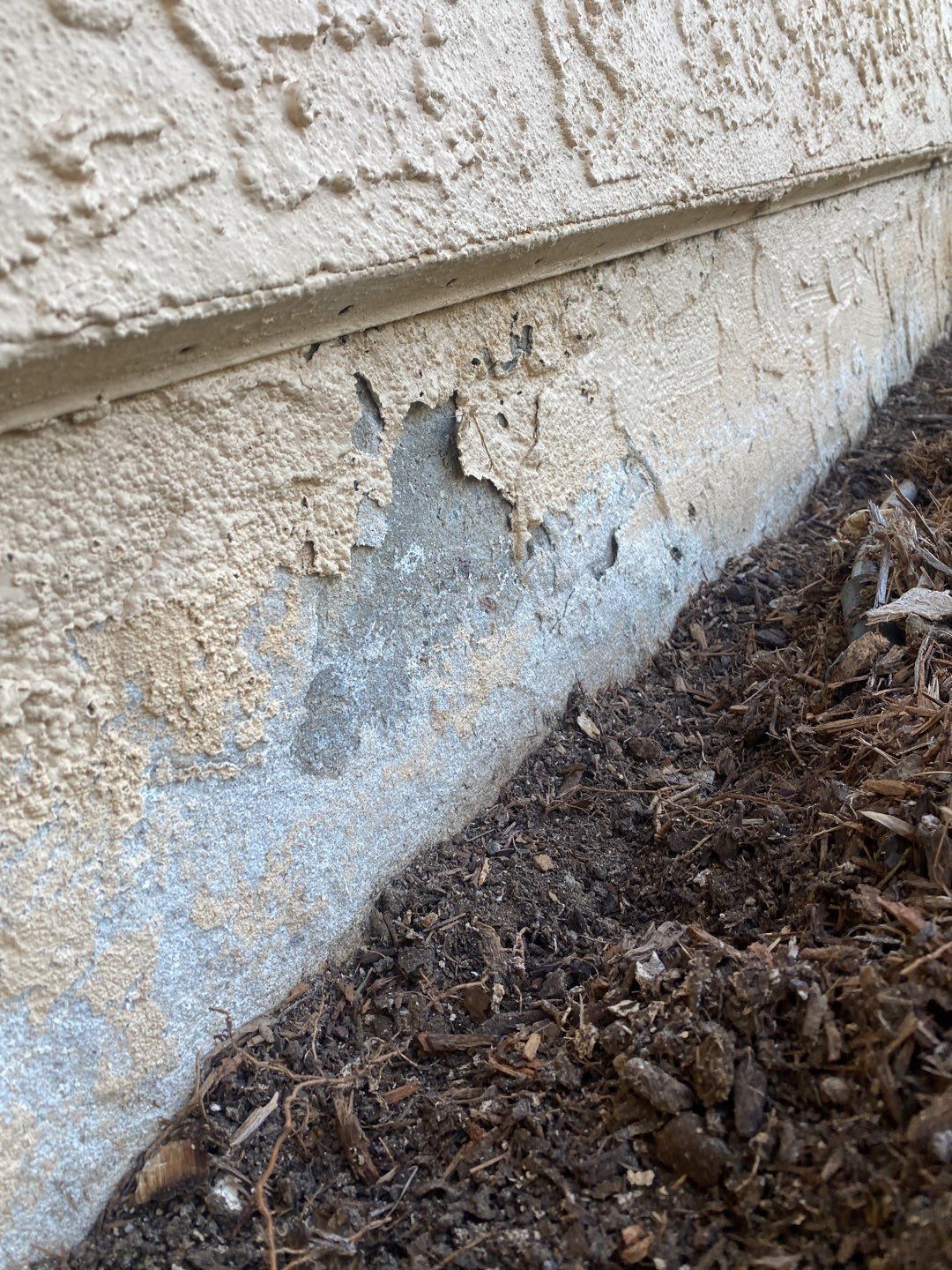
Patched Stucco May Need Better Prep or Blending
Patched stucco can fail or stand out if the repair was not bonded, textured, cured, cleaned, or primed correctly before painting. Even when the patch itself is sound, it may absorb paint differently than the surrounding wall or show a visible texture difference after the new coating is applied.
Homeowners may notice cracking around the edge of a patch, bubbling, color flashing, rough texture, or a repaired area that looks slightly different from the rest of the wall. These issues can become more noticeable after repainting because the fresh color makes uneven texture and old repair lines easier to see.
Stucco repair and paint prep should be planned together. A patch should be clean, dry, stable, and ready for coating before finish paint is applied.
Repaired Wood Can Keep Failing if the Damage Was Not Fully Fixed
Wood repairs around trim, fascia, windows, doors, railings, or porch details can create paint problems if the underlying wood is still soft, damp, split, or unstable.
Paint may peel from repaired wood if rot was covered instead of removed, filler was applied over weak material, bare wood was not primed, or joints were not properly sealed. If the same wood area keeps failing after each repaint, replacement may be more practical than another repair-and-paint attempt.
Paint can protect sound wood, but it cannot make deteriorated wood stable. If the project involves wood repair, trim work, pressure washing, or prep beyond a straightforward repaint, Chism Brothers’ specialty services may be relevant to discuss during the estimate.
Old Joints and Material Transitions Can Move Over Time
Many recurring paint problems happen where materials meet. This may include trim against stucco, fascia joints, window and door openings, porch details, masonry transitions, or places where older repairs meet original surfaces.
These joints can expand, contract, shift, or separate over time. If caulk fails or the materials move differently, the paint may crack or split along the same line again. Homeowners may think the paint failed when the real issue is the joint underneath the coating.
The solution may involve removing failed caulk, repairing loose material, using the right prep approach, or correcting a gap before painting again. The goal is to make the transition stable enough to hold a finish.
Failed Caulk Can Make Old Repairs Look Like Paint Failure
Around windows, doors, trim, fascia, and repaired joints, failed caulk can let moisture in and cause the paint around the area to peel, bubble, or crack. The damage may look like paint failure, but the problem may have started with a seam that opened up.
Painting over old caulk usually does not solve the issue. If the caulk is loose, brittle, dirty, cracked, or pulling away, it may need to be removed and replaced before primer and paint are applied.
If the failure follows a seam or joint, caulking should be evaluated before repainting. Otherwise, the same line may reopen after the new paint goes on.
Moisture May Be Getting Behind the Repaired Area
Moisture is one of the most common reasons paint keeps failing in one location. Even a well-painted surface can fail if water is entering from behind, sitting on the surface, or repeatedly soaking the same area.
Possible moisture sources include sprinklers, drainage, roofline issues, cracked stucco, failed caulk, dense landscaping, plumbing-related repairs, or water collecting near lower walls. On older La Mesa homes, past repairs may have covered a symptom without fully correcting the moisture source.
Repainting should wait until the area is dry and the moisture source has been addressed. If water keeps reaching the same repair, the next coating may fail just like the last one.
Previous Coatings May Be Weak Under the New Paint
Paint failure can happen when a new coating bonds to an old coating layer that is already weak. This is common around repaired areas where old paint, primer, patching compound, filler, or previous touch-ups have been layered over time.
If the old layer is chalky, glossy, dirty, brittle, peeling, or incompatible with the new coating, the new paint may lift with it. Proper prep may require cleaning, scraping, sanding, de-glossing, priming, or removing loose material before repainting.
The new paint is only as strong as the surface underneath it. If the old repair area is unstable, the finish coat cannot perform the way it should.
Repairs May Have Been Painted Before They Were Ready
Some repair materials need time before they can be painted. If a patch, caulk, filler, or repaired area was painted too soon, the coating may not bond well or may show cracking later.
Surfaces should be clean, dry, cured as appropriate, and stable before primer or finish paint goes on. Rushing this step can create failure that looks like a paint problem but started as a timing problem.
Good sequencing matters as much as good materials. Repair first, let the area become paint-ready, then apply primer and finish coats as needed.
Older La Mesa Homes May Have Layers of Repair History
Older and character homes often have many repair layers from different owners or contractors. A home may have patched stucco from window changes, replaced trim, filled holes from old fixtures, repaired fascia, old plumbing penetrations, or multiple generations of caulk and paint.
These areas may not all respond to paint the same way. Some may need extra prep, while others may need repair or replacement before painting. A previous repair that looked acceptable years ago may stand out once the home receives a fresh coat.
For homes with original details, woodwork, stucco texture, or preservation-sensitive features, Chism Brothers’ historic restorations service may also be worth discussing. The goal is to fix the issue without creating a repair that looks out of place.
Look at the Pattern of Failure
Homeowners can learn a lot by looking at where and how the paint is failing. If the failure follows the edge of a stucco patch, the patch or texture blend may need evaluation. If paint peels along a trim joint, caulk or movement may be involved.
If bubbling appears below a window, moisture may be getting in. If paint lifts from a filled wood area, the wood or filler may not be stable. If failure returns after every repaint, the original cause was probably never corrected.
The pattern does not always reveal the exact answer, but it helps guide the next step. A painter can use those clues to determine whether the area needs cleaning, repair, primer, caulking, or a more complete correction.
What Should Be Corrected Before Painting Again?
The right correction depends on what caused the failure. A small cosmetic issue may only need better cleaning, sanding, priming, and repainting. A recurring issue may need deeper repair.
A practical sequence may include:
- Remove loose or failing paint.
- Check whether the repair area is dry and stable.
- Repair cracked stucco, damaged wood, or loose trim.
- Remove and replace failed caulk where needed.
- Correct irrigation, drainage, or moisture sources.
- Sand or smooth rough repair edges.
- Prime bare, patched, stained, or repaired surfaces.
- Paint after the surface is clean, dry, and properly prepared.
Homeowners should avoid simply coating over the same failed area unless the cause has been addressed. Otherwise, the fresh paint may only hide the issue temporarily.
When Repainting May Be Enough
Repainting may be enough when the repaired area is stable and the previous failure was mainly due to poor prep, age, or an old coating that can be corrected. In that case, cleaning, scraping, sanding, priming, and careful repainting may solve the issue.
Repainting is more likely to work when there is no active moisture, the wood or stucco is solid, the caulk is replaced where needed, and the old coating is properly prepared.
The key is making the surface paintable again. Once the repaired area is clean, dry, stable, and properly prepped, a new coating has a much better chance of holding.
When Repairs Should Come Before Another Coat of Paint
Repairs should come first when the surface is unstable, damp, soft, cracked, loose, or repeatedly failing. Paint should not be used as the fix for damaged stucco, deteriorated wood, failed caulk, or unresolved moisture.
Homeowners should be especially careful if the same repair area has failed more than once. At that point, a painter may need to look beyond the visible paint and evaluate the underlying material.
This does not mean every repeated failure is severe. It simply means the surface is giving a clue. Addressing that clue before repainting can prevent the same issue from returning.
What to Clarify Before Scheduling the Work
Before scheduling the work, homeowners should clarify where the previous repairs were made, how long the paint lasted before failing, whether moisture or sprinklers affect the area, and whether the surrounding surface is cracked, soft, stained, or loose.
The estimate should help identify whether the problem is mostly preparation-related or whether the repaired surface itself needs more work before repainting. It should also make clear whether the plan includes repair, caulking, primer, and blending, not just a fresh coat over the failed spot.
A clear plan helps homeowners compare the quality of the preparation, not just the price of the repaint.
Talk With a La Mesa Painting Company Before Repainting
A professional evaluation is useful when paint keeps failing in the same place, especially around patched stucco, repaired wood, windows, doors, trim, fascia, or old joints.
Speaking with an experienced La Mesa painting company can help homeowners determine whether recurring paint failure is related to prep, moisture, caulking, damaged material, older coatings, or repair compatibility.
Chism Brothers Painting can evaluate the failed area and recommend the right repair-before-painting plan so the next finish has a stronger surface to bond to.
Fix the Cause Before Repainting the Same Area Again
If paint keeps cracking, peeling, bubbling, or separating around an old repair on your La Mesa home, Chism Brothers Painting can inspect the area and explain what should be corrected before repainting. They can review patched stucco, repaired wood, old joints, caulking, moisture clues, coating condition, and prep needs.
Reach out today for a
free, no-obligation estimate. Chism Brothers can help you understand whether the area needs better prep, repair, primer, caulking, moisture correction, or a more complete painting plan before another coat goes on.


Tell us about your project
Tell Us About Your Project
Contact us today to schedule a visit from one of our estimators! We’ll come to your home and provide a detailed estimate.
(858) 454-3850