Clearing Defensible Space Around a Poway Home? Should That Happen Before Exterior Painting?
Last Updated: September 9, 2026
In most cases, Poway homeowners should complete defensible-space trimming, vegetation removal, cleanup, and related exterior repairs before final painting so fresh paint is not scratched, stained, blocked, or needlessly touched up afterward.
Exterior painting and defensible-space work often affect the same parts of the property. Trimming shrubs, removing brush, clearing plants near the home, hauling debris, and improving access can all reveal or disturb exterior surfaces that may later need cleaning, repair, or paint.
For Poway homeowners, this coordination can be especially important. With hillside properties, open-space areas, rural-feeling lots, and many homes near vegetation, exterior painting should be planned as part of a broader property-maintenance process rather than treated as a standalone project.
Why Defensible-Space Work Should Usually Come First
Defensible-space work can be messy and physically demanding. Crews may be cutting, hauling, raking, removing branches, moving ladders, dragging debris, or clearing areas close to the house. If the home has already been painted, this work can scuff walls, damage trim, dirty surfaces, or expose areas that now need touch-up.
Completing the clearing first helps the repainting project start with the property in a more realistic condition. Once overgrowth is removed and debris is cleared, it is easier to see the stucco, trim, fascia, windows, doors, vents, fences, gates, and patio structures that may need attention.
Exterior paint should usually be one of the later finish steps after the property is cleared, accessible, cleaned, and ready for prep. That order helps reduce avoidable touch-ups and gives the painter a clearer view of what needs to be repaired before the final coating is applied.
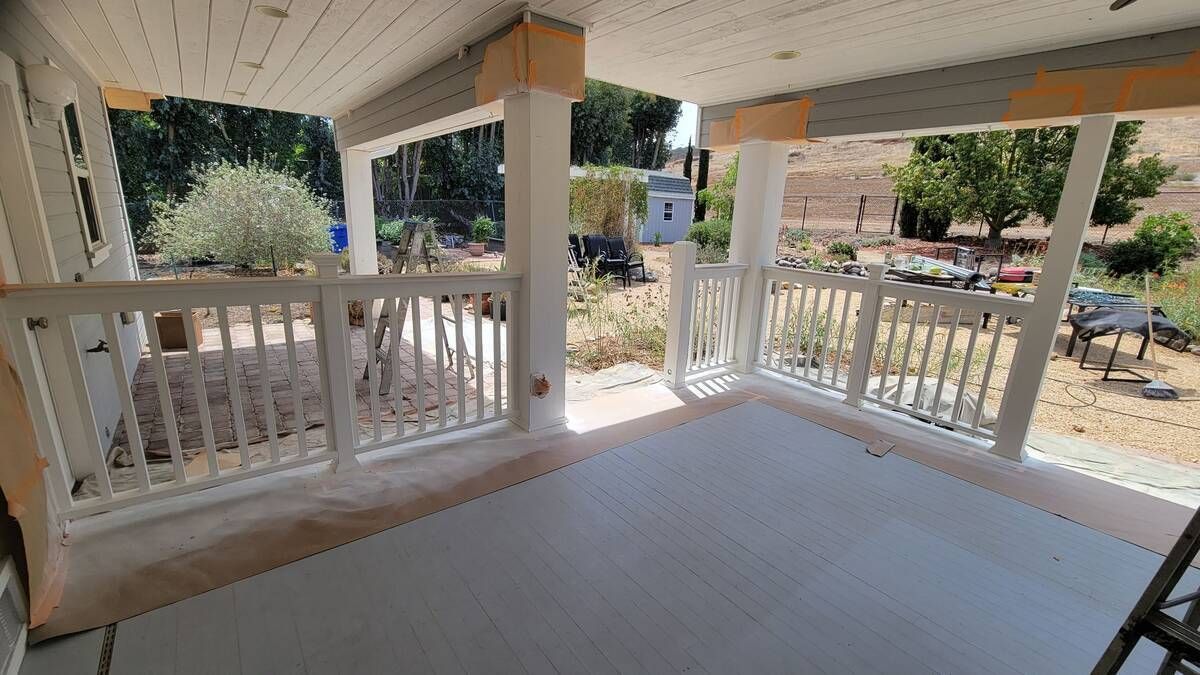
Start by Looking at Vegetation Near the Home
Homeowners should first look at plants, shrubs, trees, vines, and brush that are close to exterior walls, eaves, fascia, windows, doors, vents, fences, and patio structures. Vegetation that touches the home can block prep work and may also hide exterior damage.
Plants close to the house may conceal peeling paint, cracked stucco, failed caulk, damaged trim, weathered fascia, moisture stains, pest damage, or older repairs that are beginning to fail. Once plants are trimmed back or removed, these areas may need cleaning, repair, caulking, priming, or repainting.
This is not about giving defensible-space compliance instructions. The painting-related point is simple: vegetation management can change the visible scope of the repaint. What looked like a straightforward wall from a distance may reveal cracked stucco, peeling paint, or soft trim once the surface is accessible.
Clearing Can Improve Painter Access
Painters need room to wash, scrape, sand, repair, caulk, mask, prime, and paint. When shrubs, branches, brush, stored items, or overgrown landscaping are too close to the house, the crew may not be able to properly reach or prepare the surface.
This is especially important around side yards, rear elevations, slopes, retaining walls, patio covers, fences, gates, and areas near open space. If access is limited, the estimate may need to account for extra setup, or the homeowner may need to clear the area before work begins.
Clear access supports better prep. It also reduces the chance that finished surfaces will be disturbed later by trimming, hauling, or clearing that should have happened before painting.
Trimming Can Reveal Repairs That Should Happen Before Painting
Once vegetation is cleared, homeowners may see exterior conditions they could not see before. These issues should be evaluated before paint goes on.
Common hidden problems include cracked stucco, peeling paint, soft or weathered wood, failed caulk around windows and doors, fascia damage, irrigation stains, damaged vents, exposed trim, and old patchwork. Some of these may be routine prep items. Others may require repair before painting.
It is better to discover these issues before the repaint than after the home already has a fresh finish. If repairs are found later, newly painted areas may need to be patched, sanded, primed, or repainted again.
Cleanup Should Happen Before Surface Preparation
Defensible-space work can leave dust, leaves, sawdust, dirt, bark, pollen, and plant debris around the home. These materials can collect on stucco, trim, windows, doors, patios, lower walls, and outdoor structures.
Exterior painting should begin after clearing and cleanup are complete enough for the home to be washed and inspected properly. Paint needs a clean, dry, stable surface. Heavy yard cleanup after painting can create unnecessary touch-up needs, especially if branches, tools, or debris rub against newly finished areas.
A simple order helps: clear first, clean next, then prep and paint. That sequence gives the paint a better surface and reduces the risk of dirt or debris interfering with the final finish.
Slopes and Open-Space Lots May Affect Equipment Placement
Poway’s hillside and open-space properties can create access challenges. Sloped ground, uneven terrain, retaining walls, narrow side yards, or drop-offs may affect ladder placement, equipment staging, and how painters reach upper walls, eaves, fascia, and rear elevations.
Defensible-space clearing may make some access easier, but it can also reveal areas where the painting crew needs a specific plan. Homeowners should point out steep areas, loose ground, gates, terraces, retaining walls, or difficult access points during the estimate.
The focus here is not hillside engineering. The painting concern is whether the crew can safely and efficiently reach the surfaces that need washing, prep, repair, primer, and finish paint.
Coordinate Fences, Gates, Patio Covers, and Exterior Wood
Defensible-space work often overlaps with outdoor features near the home. Fences, gates, patio covers, pergolas, decks, railings, and exterior wood details may need trimming around, repair, painting, or staining.
If any of these features are being repaired, replaced, cleared around, stained, or painted, that work should happen before final painting whenever possible. Otherwise, newly painted walls, trim, fences, or patio structures may be scratched or need touch-ups after clearing work is done.
When several exterior surfaces are close together, the order of work matters. A painter can help determine whether the house, fence, gate, patio cover, or related wood features should be handled together or in phases. If the project involves exterior wood details, decks, railings, pressure washing, or related prep, Chism Brothers’ specialty services may also be worth discussing during the estimate.
Watch for Irrigation and Moisture Issues After Clearing
Once vegetation is trimmed back, homeowners may notice sprinklers, drip lines, drainage patterns, or wet areas that were hidden before. These can affect exterior paint if water repeatedly hits stucco, trim, fascia, doors, fences, or lower walls.
Irrigation overspray, damp soil against wood, and poor airflow from dense landscaping can contribute to staining, peeling, bubbling, failed caulk, and wood damage. If those moisture sources remain active, repainting alone may not solve the problem.
Clearing vegetation is a good time to correct water patterns that could shorten the life of the new paint. If a lower wall or trim section has failed before, the surrounding moisture conditions should be reviewed before that area is repainted.
Consider Open-Space Requirements Without Turning This Into a Code Article
Some Poway homes may have additional exterior considerations because of hillside, open-space, or Wildland-Urban Interface conditions. Homeowners should confirm any local, HOA, insurance, or property-specific requirements before making exterior changes.
This article is not a fire-code or legal guide. The main point is that exterior material changes, vents, fences, gates, patio covers, and vegetation management may involve requirements beyond paint. Those details should be verified with the appropriate local, HOA, insurance, or professional source.
Painting should be coordinated with the broader exterior maintenance plan, especially on properties near open space. That helps homeowners avoid completing work in the wrong order or making exterior changes that need to be revisited.
When Painting Can Happen Before Clearing
There are limited cases where painting first may be acceptable. For example, if defensible-space work is already complete, vegetation is far from the home, or clearing will happen in areas that do not affect painted surfaces, the painting schedule may not need to wait.
Painting first may also be reasonable when access is already clear, no branches or shrubs touch the home, no major debris removal will happen near painted surfaces, and exterior repairs have already been identified. In that situation, clearing and painting may not interfere with each other.
The issue is not the calendar order alone. The issue is whether later clearing work could damage, dirty, block, or change the surfaces being painted. If it could, clearing should usually be completed first.
A Smart Order for Defensible-Space Work and Exterior Painting
The exact order may vary by property, but a practical sequence often looks like this:
- Identify vegetation, brush, or landscaping near the home.
- Complete major trimming, clearing, and debris removal.
- Review access around walls, eaves, fences, gates, and patio structures.
- Check for newly visible stucco, trim, fascia, caulk, or wood damage.
- Correct irrigation, drainage, or moisture issues near painted surfaces.
- Complete needed repairs before paint.
- Wash and prep the exterior after clearing is complete.
- Paint the home and related exterior features after surfaces are clean and accessible.
This order reduces avoidable touch-ups and helps the paint job start with the real condition of the property visible. It also gives homeowners a better chance to coordinate clearing, repairs, cleaning, and painting as one connected project.
What to Clarify Before Scheduling the Work
Homeowners do not need to solve every access or prep detail alone, but they should clarify whether defensible-space work will happen before or after painting and whether any vegetation still blocks the home.
It is helpful to discuss whether shrubs, branches, brush, fences, gates, patio covers, or sloped areas will affect painter access. Homeowners should also point out any areas where clearing may reveal hidden damage or where irrigation may be contributing to paint problems.
The estimate should reflect the home after clearing or account for what still needs to happen before painting begins. If the painter looks at the property before major clearing, the scope may need to be updated after the surfaces are visible.
Questions to Ask During the Estimate
Before scheduling exterior painting, homeowners should ask questions that connect defensible-space work with the painting plan.
Helpful questions include:
- Should vegetation clearing happen before painting begins?
- Are any walls, eaves, fences, gates, or patio structures blocked by plants?
- Could debris removal scuff or stain freshly painted surfaces?
- Are there stucco, trim, fascia, or caulking repairs hidden by landscaping?
- Do sprinklers or drainage patterns affect the areas being painted?
- Will slopes or open-space access affect equipment placement?
- Should fences, gates, or patio covers be painted or stained as part of the project?
- Will any property-specific requirements affect exterior repairs or materials?
- Should the estimate be updated after clearing is complete?
These questions help homeowners avoid unclear scope and surprise touch-ups. They also make it easier to decide what should be cleared, repaired, cleaned, and painted first.
Talk With a Poway Painting Company Before Finalizing the Timeline
Homeowners should consider professional guidance when exterior painting overlaps with vegetation clearing, hillside access, stucco repairs, wood repairs, fences, patio covers, or open-space property conditions.
Speaking with an experienced Poway painting company can help you understand where exterior painting should fit after defensible-space work. A painter can review access, surface prep, stucco, fascia, trim, caulking, wood condition, and areas that may need repair before paint goes on.
Chism Brothers Painting can help Poway homeowners plan the repaint around the actual condition of the property, not just the visible paint color.
Plan Your Poway Defensible-Space and Exterior Painting Timeline With Chism Brothers Painting
If you are clearing defensible space around a Poway home and planning to repaint, Chism Brothers Painting can help identify what should happen before painting begins. They can review access, vegetation, cleanup, stucco, trim, fascia, fences, gates, patio structures, repairs, and prep needs so the exterior is painted after the property is ready.
Reach out today for a
free, no-obligation estimate before finalizing the project order. Chism Brothers can give you honest guidance on what should be cleared, repaired, cleaned, protected, or coordinated before exterior painting begins.


Tell us about your project
Tell Us About Your Project
Contact us today to schedule a visit from one of our estimators! We’ll come to your home and provide a detailed estimate.
(858) 454-3850